 Reviews


 Proudly American


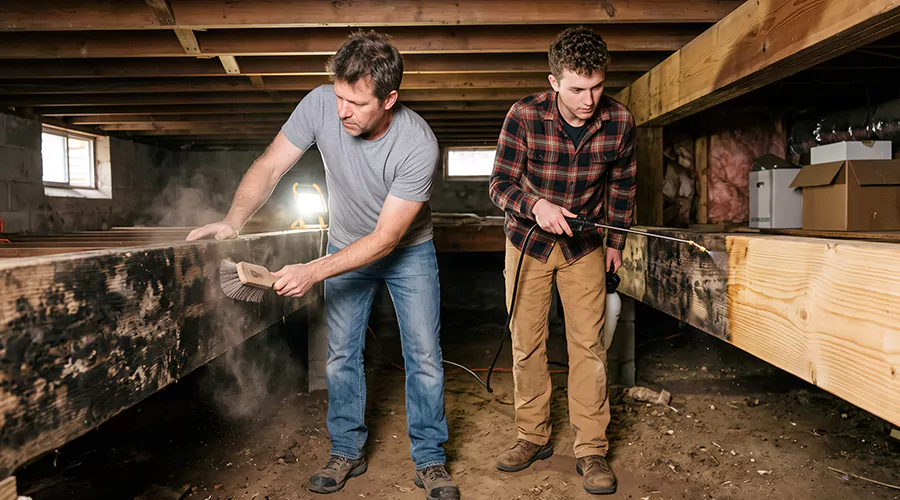
Yes, mold-damaged wood can often be restored when the wood remains structurally sound and the growth has not caused deep decay or severe material loss. Restoration starts by correcting the moisture source, drying the wood, removing surface growth, and then checking whether staining or physical damage remains.
When Is Mold-Damaged Wood Worth Restoring?
Wood restoration is usually practical when the material remains hard and stable after drying. Surface mold on framing or finished wood can often be cleaned when the moisture source has been corrected.
Good restoration candidates include:
- Solid wood with surface growth
- Framing that remains firm
- Finished wood with light contamination
- Hardwood with limited mold staining
- Furniture with stable joints
The EPA lists wood surfaces among materials that can be cleaned during mold remediation. Finished wood may be cleaned with mild detergent and clean water before being allowed to dry fully.
When Should Mold-Damaged Wood Be Replaced?
Replacement becomes more practical when moisture has weakened the wood rather than only stained the surface.
| Wood Condition | Likely Response |
|---|---|
| Light surface mold | Clean and dry |
| Firm wood with staining | Clean then reassess |
| Shallow discoloration | Sanding may help |
| Soft or decayed wood | Replace damaged section |
| Severe warping | Repair or replace |
| Structural strength loss | Replace or reinforce |
A surface that remains soft after drying should not be treated as a cosmetic mold problem.
How Should Mold Be Removed From Sound Wood?
Correct the moisture source before cleaning begins.
A general sequence is:
- Stop the water or humidity source.
- Let wet wood begin drying.
- Remove loose surface contamination carefully.
- Clean sound wood with a suitable detergent.
- Dry the material completely.
- Recheck for visible growth or musty odor.
- Refinish the surface only after it is dry.
EPA guidance says hard surfaces should be cleaned with detergent and water, then dried completely. Moldy porous materials can be harder to restore because growth may enter crevices below the surface.
Can Mold Stains Remain After the Wood Is Clean?
Yes. Mold can leave cosmetic staining even after active growth has been removed. A remaining dark mark does not automatically mean the wood still contains active mold. The EPA notes that mold can cause staining or cosmetic damage that may not return to the original appearance after cleaning. After the wood is fully dry, shallow staining may be improved through wood refinishing or light sanding when the material is suitable. Sanding should not begin while wood still contains excess moisture.
Can Structural Wood Framing Be Saved?
Yes, framing can often remain when it is solid and the mold contamination can be cleaned. Mold growth alone does not automatically mean studs or joists need replacement.
Framing deserves closer evaluation when:
- A screwdriver easily penetrates the wood.
- The material has lost its normal hardness.
- Sections are splitting or breaking apart.
- Moisture readings stay high.
- A leak has continued for a long period.
- The wood carries structural loads.
Can Mold-Damaged Hardwood Flooring Be Restored?
Hardwood can sometimes be restored after mold exposure when boards have dried and remain stable. Mold may develop on the underside after water becomes trapped above the subfloor, so cleaning only the top finish may not address the entire problem. Restore water damaged wood only after moisture levels have stabilized. Sanding a wet floor can create an uneven surface as boards continue changing shape. Replacement becomes more likely when boards are severely buckled or the subfloor has deteriorated.
Can Moldy Wood Furniture Be Saved?
Many solid wood furniture pieces can be restored when the frame remains stable.
Furniture should be evaluated for:
- Loose joints
- Swollen panels
- Lifting veneer
- Persistent musty odor
- Soft wood
- Mold inside enclosed sections
Refinishing wood furniture can improve staining after cleaning, but refinishing should not be used to cover active growth.
What Warning Signs Mean Wood Damage Is More Serious?
Serious damage usually appears through changes in strength or shape rather than mold color.
Watch for these signs:
- Wood feels soft.
- The surface flakes apart.
- Boards remain badly warped.
- Joints have opened.
- Mold returns after cleaning.
- A musty odor remains.
- The moisture source is still active.
- Structural members show material loss.
Mold color alone should not decide whether wood is discarded.
What Can You Check Yourself?
A hardness and moisture check can help separate cosmetic growth from deeper water damage.
Use this process:
- Check both areas for firmness.
- Compare moisture readings.
- Look for splitting or deformation.
- Recheck after another day of drying.
- Note whether odor or visible growth returns.
Do not probe structural wood aggressively or remove wall coverings simply to inspect concealed framing.
When Should You Call a Professional?
Professional assessment is appropriate when mold affects structural framing or covers more than about 10 square feet. EPA guidance suggests broader remediation planning for larger mold areas.
Consider professional help when:
- Structural wood feels soft.
- Several framing members are affected.
- Sewage caused the moisture problem.
- Hidden cavities contain mold.
- Mold keeps returning after cleaning.
- The repair area is difficult to isolate.
How Can You Prevent Mold From Returning to Wood?
Prevention depends on keeping the wood dry after cleaning. Repair leaks before refinishing and control indoor humidity so condensation does not recreate damp conditions.
Useful habits include:
- Repair plumbing leaks promptly.
- Keep indoor humidity below 60 percent when possible.
- Dry wet wood quickly.
- Maintain airflow around stored furniture.
- Inspect basements for recurring dampness.
- Avoid covering wood that is still wet.
Conclusion
Mold-damaged wood can often be restored when it remains hard and structurally stable. The moisture source must be corrected first, followed by cleaning and complete drying. Staining can remain even after mold has been removed, so appearance alone should not determine whether wood is discarded. If framing is soft or contamination is widespread, professional assessment can help determine what can safely remain.
Frequently Asked Questions
Does mold permanently ruin wood?
Not always. Surface growth can often be removed when the wood remains solid and the moisture problem is corrected.
Can you sand mold off wood?
Sanding may help with remaining surface staining after cleaning and drying. It should not replace moisture correction.
Does black mold mean wood must be replaced?
No. Color does not determine structural condition. Firm wood may still be restorable after proper cleanup.
Can moldy hardwood floors be saved?
Sometimes. The boards must dry fully and remain stable, while contamination beneath the flooring must also be addressed.
Can painted wood be cleaned?
Often, yes. Sound finished surfaces can usually be cleaned more easily than unfinished porous wood.
Can mold return after wood is restored?
Yes. Mold can return if the leak or humidity problem that caused the original growth remains.